How to get Sai working on Windows 10

relay314:

zooophagous:

professorsugoi:

neonlinkart:

Ok, so initially, Paint Tool Sai doesn’t work on Windows 10 for some people. So here’s how you fix that. 

First of all, go to the folder where your program is installed. This is either in your C: drive in the “Program Files” folder, or, it’s running from a separate location, either way, you can use the Windows Search option with “Sai” to find it if you’re having difficulty.

image

Open the folder and right click on the Sai icon that’s marked “Application”. Not the green square one, the actual application with the Sai logo. 

image
image

Click “Properties” and then “Compatibility” 

image

And click “Run Compatibility Troubleshooter”. 

image

Allow the program to detect problems. It shouldn’t take too long, so be patient! 

image

Click “Try recommended settings”

image

This pop up will tell you what mode you will need to run it in, luckily, Windows will set it for you and allow you to test it. So click the test!

image

Cool! It works! 

image

If everything is fine (and it should be); click to close the troubleshooter and allow it to run one final check. If not, click explore additional options to open Windows Help, or, go back to Properties as seen in images 3 and 4, and test the different compatibility modes manually. 

image

You may need to back into the Properties box anyway to turn on the Compatibility Mode as this may not be checked, however, the compatibility you need should already be selected still.

You could also need to check “Run this program as administrator” too.
 Make sure you click “Apply” afterwards.

image

And that’s it! Enjoy drawing with Windows 10! 
Don’t forget you might need to set up your tablet settings again too and change your Maximum Canvas size in Others > Options > Workspace Usage

I should also say that this method would work with other programs too, including Manga Studio and Clip Studio Paint.

I hope this helped! 
Please reblog this to help others! 

Neonlink~

For my art peeps

I’m not a digital artist but I know a lot of them. Here’s some help for anyone who needs it.

THANK YOU KINDLY

vcr-wolfe:

xsculpts:

Next on the queue is some pointers on color.  This may seem like the blind leading the blind, because it is, but I’ve put together a few tips that help me think about color. 

The color wheel extensions for Photoshop are from Len White(free), anastasiy and coolorus

ive always struggled a lot with describing what its like being colorblind on the red-green spectrum and giving tips on how to color as an artist (mostly bc i dont know what its like to NOT be colorblind) but this guy puts it extremely well! props to them for it

Things almost every author needs to research

writeinspiration:

clevergirlhelps:

the-right-writing:

  • How bodies decompose
  • Wilderness survival skills
  • Mob mentality
  • Other cultures
  • What it takes for a human to die in a given situation
  • Common tropes in your genre
  • Average weather for your setting

yoooo

Finally found this!

theblacksmithsdaughter, is this one of the posts you were looking for?

crisisavertedcosplay:

sillymyway:

HAVE YOU GUYS HEARD OF POSTERAZOR

THIS SHITS AWESOME

its helped me a bunch with my xenoblade props’ accuracy and i dont think many cosplayers know about it. its a really nifty program that converts an image into a poster, any size! you just tape the sheets together bam! perfectly scaled prop. 

the website is http://posterazor.sourceforge.net/ . its got a virus-free download. 

This would be handy for large appliques and even patterns!

do you ever just

sushibuns:

yokoboo:

maggotmagnet:

squigglydigg:

“no that’s not dramatic and cheesy enough”

“getting warmer”

“t HERE IT IS”

i love this but i dont know how to do this

hoW

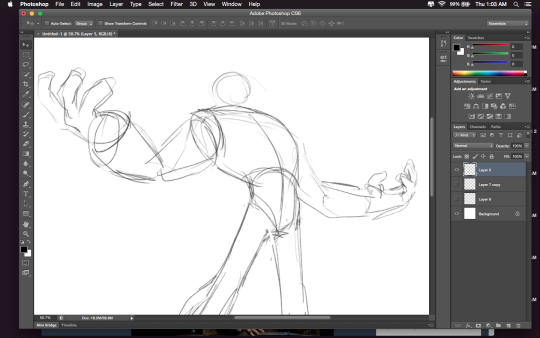
For those wondering about HOW to do this, here’s a short explanation according to me:

Drawing A to Drawing B:
-the most obvious change is the exaggeration of the line of motion in the character.  

In Drawing B the line of motion is much more pronounced, creating more drama and movement to the whole composition

-The arms are open wider, showing more confidence and exuberance in the character, exaggerating their emotions so they can be more clearly read without having to look to the face for emotional cues.

-the legs are wider apart, adding to the aforementioned confidence but also giving the character a solid foundation, visually speaking.

-The head is tilted back and overlapped by the chest, adding a touch of dynamic perspective to the drawing.

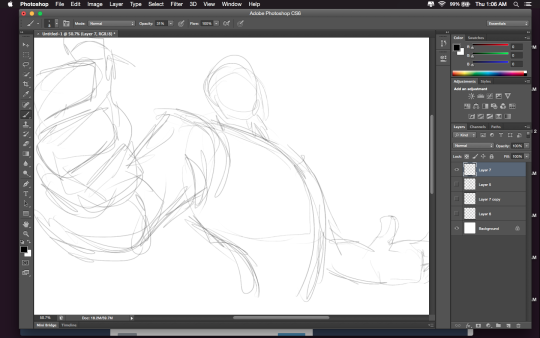
Drawing B to Drawing C: 
-Most obvious change is to zoom in on the character.  Character framing is just as important as what the character is doing.  Zooming in can help infensify emotions.  this shot is ALL about this character and what they’re feeling.
-Because of the zooming in, the arms/hands would have gotten lost, so instead of making the canvas wider, the artist has elected to rotate the character slightly, bringing a dynamic angle to things and more intensity to the close shot.
-While the character is more upright in this shot compared to Drawing B, in Drawing C the chest still slightly overlaps the neck, preserving the feeling of being slightly below the character (putting them in a position of power relative to the viewer), which helps maintain confidence and power in the character.
-the chest is exaggerated to carry the majority of the body’s line of action so even though you cannot see the legs, our brains are able to fill in the gap and envision that line of action.
-The cropping/framing of the character allows for a more interesting composition/negative shapes created by the positive (character) on the negative (background), creating more visual interest as well as a circular motion to the composition through the arms, across the face to the negative space for the eyes to rest in before dropping to the hand in the background and back through the composition again.

need refs/inspo for period clothing?

jef-jaxon:

inkys-resources:

here you go:

lots of periods in one spot/fashion through centuries:

it indeed is western/european centric, I’m sorry for that, but for other cultures I simply don’t have so many references

What a great post!

In Which Diversity Isn’t a Myth

adrielthefallen:

girl-with-sandshoes:

clementive:

Ok. I’m tired of the typical vampire, werewolf and fairy.I’m also tired of the occidental-centrism in mythology. Hence, this list. 

I tried to included as many cultural variants as I could find and think of. (Unfortunately, I was restricted by language. Some Russian creatures looked very interesting but I don’t speak Russian…) Please, add creatures from your culture when reblogguing (if not already present). It took me a while to gather all those sites but I know it could be more expansive. I intend on periodically editing this list. 

Of note: I did not include specific legendary creatures (Merlin, Pegasus, ect), gods/goddesses/deities and heroes.

  • Dragons

The Chinese Dragon

The Japanese Dragon

The Korean Dragon

The Vietnamese Dragon

The Greek Dragon

The Indian Dragon

The Polish Dragon

The Austrian Dragon

The British Dragon

The Ancient Dragon (Egypt, Babylon and Sumer)

The Spanish Basque Dragon

Of the Cockatrice (creature with the body of a dragon)

Alphabetical List of Dragons Across Myths (Great way to start)

  • Little creatures (without wings)

The Legend of the LeprechaunsThe Leprechaun

Chanaque /Alux (the equivalent of leprechauns in Aztec/Mayan folklore)

Elves

Elves in Mythology and Fantasy

Elves in Germanic Mythology

Kabeiroi or Cabeiri (Dwarf-like minor gods in Greek mythology)

Norse Dwarves

The Myth of Loki and the Dwarves

Ten Types of Goblins

Goblins

Tengu: Japanese Goblins

Gnomes 

More on Gnomes

Pooka: an Irish phantom

  • Creatures with wings (except dragons)

Fairies

All sorts of Cultural Fairies

Fairies in Old French Mythology 

A Fairy List

Bendith Y Mamau (Welsh fairies)

Welsh Fairies

Peri (Persian fairies)

Yü Nü (Chinese fairies)

The Celtic Pixie

Angels in Judaism

Angels in Christianity

Hierarchy of Angels

Angels in Islam

Irish Sylph

Garuda (Bird-like creature in Hindu and Buddhist myths)

Bean Nighe (a Scottish fairy; the equivalent of a banshee in Celtic mythology)

Harpies

  • Spirited Creatures

Druids

Jinn (Genies in Arabic folklore)

Types of Djinns

Aisha Qandisha and Djinn in Moroccan Folklore

Oni (demons in Japanese folklore)

Nymphs

Spirits in Asturian Mythology

Valkyries

Lesovik

Boggarts: The British Poltergeist

Phantom black dogs (the Grim)

Demons in Babylonian and Assyrian Mythology (list)

Demons in the Americas (list)

European Demons (list)

Middle-East and Asia Demons (list)

Judeo-Christian Demons (list)

Nephilim, more on Nephilim

Mahaha (a demon in Inuit mythology)

Flying Head (a demon in Iroquois mythology)

  • Ghosts

Toyol (a dead baby ghost in Malay folklore)

Malay Ghosts

Yuki-onna (a ghost in Japanese folklore)

The Pontianak (a ghost in Malay mythology)

Funayurei (a ghost in Japanese folklore)

Zagaz (ghosts in Moroccan folklore)

Japanese Ghosts

Mexican Ghosts

  • Horse-like mythical creatures

Chinese Unicorns

Unicorns

The Kelpie (Could have also fitted in the sea creatures category)

The Centaur

The Female Centaur

Hippocamps (sea horses in Greek mythology)

Horse-like creatures (a list)

Karkadann, more on the Karkadann (a persian unicorn)

Ceffyl Dwfr (fairy-like water horse creatures in Cymric mythology)

  • Undead creatures

The Melanesian Vampire 

The Ewe Myth : Vampires

The Germanic Alp

The Indonesian Vampire

Asanbosam and Sasabonsam (Vampires from West Africa)

The Aswang: The Filipino Vampire

Folklore Vampires Versus Literary Vampires

Callicantzaros: The Greek Vampire

Vampires in Malaysia

Loogaroo/Socouyant: The Haitian Vampire

Incubi and Sucubi Across Cultures

Varacolaci: The Romanian Vampire

Brahmaparusha: The Indian Vampire

Genesis of the Word “Vampire”

The Ghoul in Middle East Mythology

Slavic Vampires

Vampires A-Z

The Medical Truth Behind the Vampire Myths

Zombies in Haitian Culture

  • Shape-shifters and half-human creatures (except mermaids) 

Satyrs (half-man, half-goat)

Sirens in Greek Mythology (half-woman and half-bird creatures)

The Original Werewolf in Greek Mythology

Werewolves Across Cultures

Werewolf Syndrome: A Medical Explanation to the Myth

Nagas Across Cultures

The Kumiho (half fox and half woman creatures)

The Sphinx

Criosphinx

Scorpion Men (warriors from Babylonian mythology)

Pooka: an Irish changelings

Domovoi (a shape-shifter in Russian folklore)

Aatxe (Basque mythology; red bull that can shift in a human)

Yech (Native American folklore)

Ijiraat (shapeshifters in Inuit mythology)

  • Sea creatures

Selkies (Norse mermaids)

Mermaids in many cultures

More about mermaids

Mermen

The Kraken (a sea monster)

Nuckelavee (a Scottish elf who mainly lives in the sea)

Lamiak (sea nymphs in Basque mythology)

Bunyip (sea monster in Aboriginal mythology)

Apkallu/abgal (Sumerian mermen)

An assemblage of myths and legends on water and water creatures

Slavic Water Creatures

The Encantado (water spirits in Ancient Amazon River mythology)

Zin (water spirit in Nigerian folklore)

Qallupilluk (sea creatures in Inuit mythology)

  • Monsters That Don’t Fit in Any Other Category

Aigamuxa, more details on Aigamuxa

Amphisabaena

Abere

Bonnacon

Myrmidons (ant warriors)

TrollMore on Trolls

Golems 

Golems in Judaism

Giants: The Mystery and the Myth (50 min long documentary)

Inupasugjuk (giants in Inuit mythology)

Fomorians (an Irish divine race of giants)

The Minotaur

The ManticoreThe Manticore and The Leucrouta

The Ogre

The Orthus (two-headed serpent-tailed dog)

The Windigo

The Windigo Psychosis

Rakshasa (humanoids in Hindu and Buddhist mythology)

Yakshas (warriors in Hindu mythology)

Taqriaqsuit (“Shadow people” in Inuit mythology)

  • References on Folklore and Mythology Across the Globe

Creatures of Irish Folklore 

Folklore and Fairytales

An Overview of Persian Folklore

Filipino Folklore

Myths, Creatures and Folklore

Alaska Folklore

Spanish (Spain) Mythology

Mythical Archive

Mythology Dictionary

List of Medieval and Ancient Monsters

Native American Animals of Myth and Legends

Native American Myths

Bestiary of Ancient Greek Mythology

Mythology, Legend, Folklore and Ghosts

Angels and Demons

List of Sea Creatures

Yoruba Mythology

Ghosts Around the World, Ghosts From A to Z

Strange (Fantastic) Animals of Ancient Egypt

Egyptian Mythology

Creatures from West Africa

On the Legendary Creatures of Africa

Myths, Creatures and Folklore

  • References on writing a myth or mythical creatures

Writing a MYTHology in your novel?

How to Write a Myth

10 Steps to Creating Realistic Fantasy Creatures

Creating Fantasy Creatures or Alien Species

Legendary Creature Generator

Book Recommendations With Underrated Mythical Creatures

(I have stumbled upon web sites that believed some of these mythical creatures exist today… Especially dragons, in fact. I just had to share the love and scepticism.)

This is perfect for my latest project ^~^

I need this to finish fleshing out my urban fantasy beyond Europe. Thanks!